Retrofit aluminum facades –
without replacement.
The system that thermally and visually upgrades your aluminum facade – while your building stays fully operational, for no more than half the cost of a new facade.
The Problem with Aluminum Facades
Aluminum conducts heat 1000× better than wood. Even narrow profiles cause massive energy losses – good thing this can now be solved far more affordably with ALU-THERMIC than with a new facade.
On top of that: most facades become leaky after 20+ years. Our system is the fast, cost-effective solution for that too.
High energy costs
Uninsulated aluminum facades are the primary source of energy loss in commercial buildings.
Expensive alternatives
Full facade replacement can cost twice as much – and shuts down operations for weeks.
Mold & drafts
Cold pressure near windows leads to condensation, mold, and poor indoor climate.
The EU Buildings Directive (EPBD 2024) – What commercial property owners need to know now
Since May 2024, the new EU Buildings Directive is in force. From 2030, binding minimum energy performance standards apply to non-residential buildings. Those who renovate today secure subsidies, avoid penalties and increase property value – with the ALU-THERMIC system for no more than half the cost of a new facade.
EPBD 2024 entered into force. Transposition into national law required by May 2026.
Transposition in Germany: the Building Modernisation Act (GModG), promulgated on 28 July 2026, transposes the EPBD and replaces the GEG.
Non-residential buildings must meet Minimum Energy Performance Standards (MEPS): better than the worst 16% of 2020 stock.
Tightening: MEPS for non-residential buildings rises – must be better than the worst 26% of 2020 stock.
Goal: Climate-neutral building stock in the EU by 2050. Early renovation = competitive advantage and property value increase.
Sources: Energy performance of buildings – summary (EUR-Lex) · Directive (EU) 2024/1275 (EUR-Lex) · Building Modernisation Act GModG (BMWSB, German)
USA: Building Performance Standards (BPS) – What commercial property owners need to know
There is no single federal law for existing buildings – instead, a growing number of cities and states enforce binding performance standards with deadlines and penalties. New York City and Washington State lead the way; Boston, Denver, Maryland and others follow.
New York City (Local Law 97): First compliance period underway. Buildings over 25,000 sq ft face CO₂ limits – penalty: $268 per metric ton of CO₂e above the cap.
Washington State (Clean Buildings Act): Buildings over 220,000 sq ft must meet binding energy targets (EUI) by June 1, 2026.
Washington expands: over 90,000 sq ft by June 2027, over 50,000 sq ft by June 2028. Boston (BERDO) and Denver tighten in stages as well.
New York tightens sharply: the office limit drops from 8.46 to 4.53 kg CO₂e/sq ft. Without retrofits, 75–80% of buildings would exceed their limits.
Goal: −80% building emissions in New York by 2050. Nationwide, 50+ cities and states have benchmarking or performance mandates.
Sources: NYC Local Law 97 (nyc.gov) · WA Clean Buildings Act (commerce.wa.gov)
Canada: Green Buildings Strategy & 2025 Model Codes – What commercial property owners need to know
Canada has legislated net-zero by 2050. The Canada Green Buildings Strategy (2024) and the 2025 National Model Codes introduce the first harmonized energy requirements for retrofitting existing buildings.
Canada Green Buildings Strategy: federal framework for a net-zero building sector by 2050. The retrofit rate is set to triple to 3% per year.
2025 National Model Codes (incl. NECB 2025): first energy-efficiency requirements for alterations to existing buildings – stricter treatment of thermal bridging.
Adoption deadline: provinces and territories are to bring the 2025 codes into force within 18 months – by around June 2027.
Interim target for the building sector: −37% emissions vs. 2005. British Columbia mandates net-zero-ready new buildings from 2032.
Legislated net-zero by 2050: over 75% of the buildings standing in 2050 are already built – retrofitting the existing stock is the decisive lever.
Sources: Canada Green Buildings Strategy (NRCan) · National Model Codes 2025 (CBHCC)
Facts that should make every building owner act
These figures prove why aluminum facades urgently need insulation – and why now is the right time.
Aluminum conducts heat at 160 W/mK – compared to stainless steel (15 W/mK) or wood (0.13 W/mK), an extreme thermal conductor.
Three quarters of EU buildings are considered energy inefficient – the annual renovation rate is just 1%.
Buildings account for around 40% of energy consumption and 36% of greenhouse gas emissions in the EU.
The largest transmission heat loss in a building usually occurs through the exterior walls.
Thermal bridges such as uninsulated aluminum profiles can increase heating costs by up to 10–20%.
According to the EU Buildings Directive, the annual renovation rate must at least double by 2030.
How the ALU-THERMIC System Works
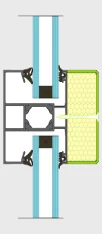
Our unique system insulates and seals with a single material in all 3 dimensions – no demolition, no business interruption.
Survey & Prefabrication
Precise on-site survey. Insulating profiles are individually prefabricated.
External & Internal Installation
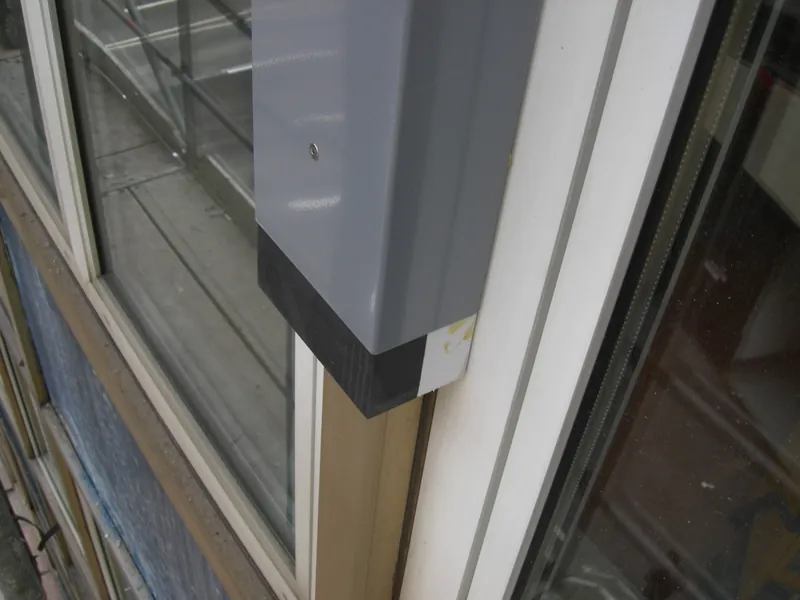
Straightforward installation from outside, and rarely from inside. Interior operations continue without disruption.
Insulation & Sealing
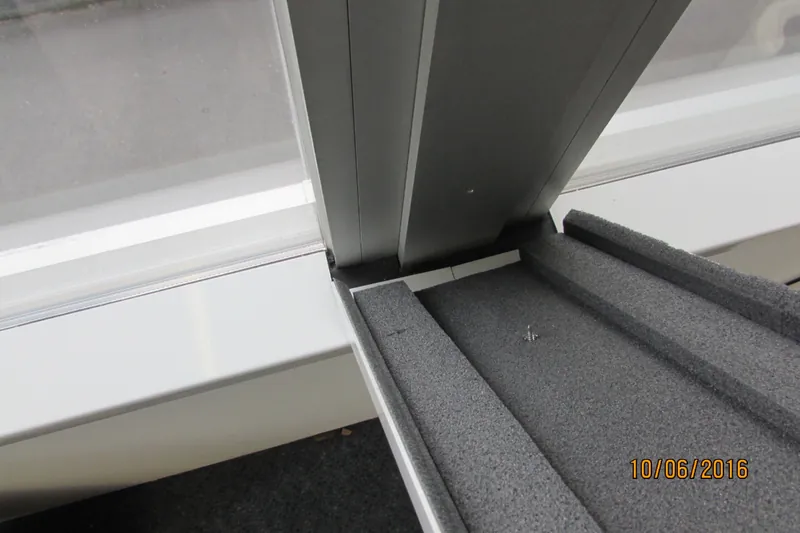
PE foam used as specialty insulation and seal against heat, water, and wind.
Completion & Color
Powder coating in any RAL color. Your facade looks brand new – and performs like it too.
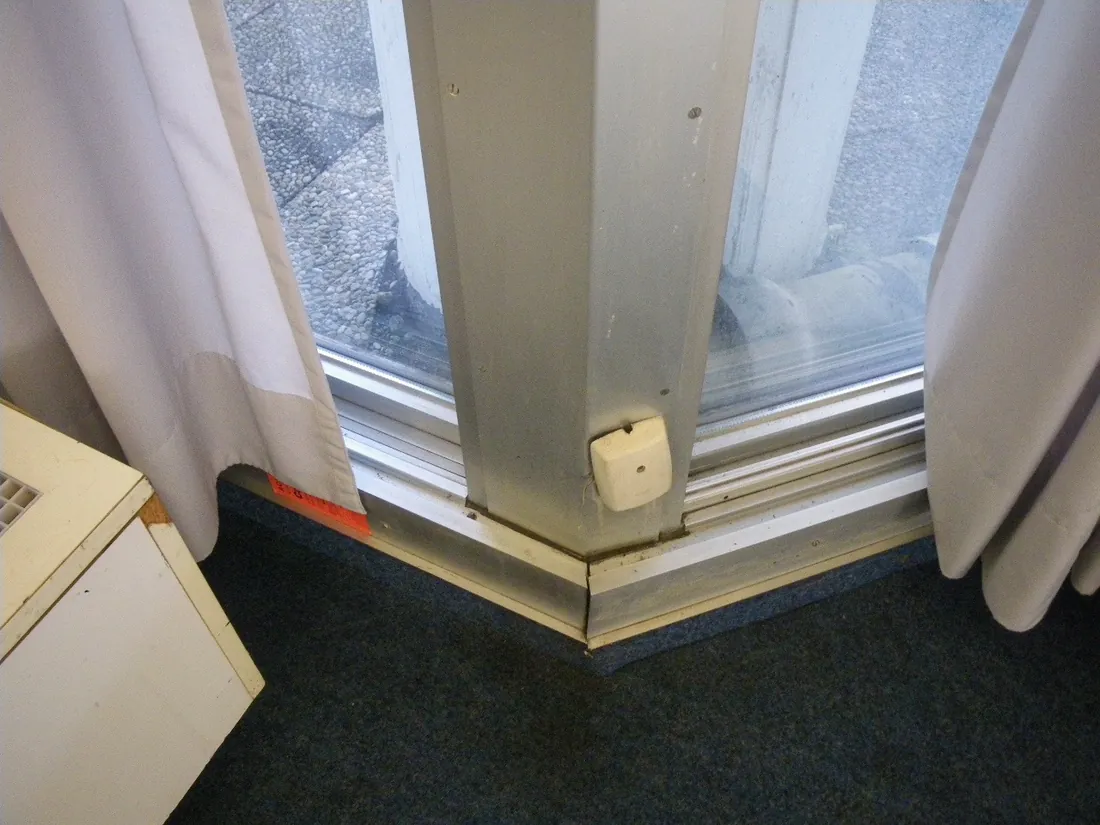
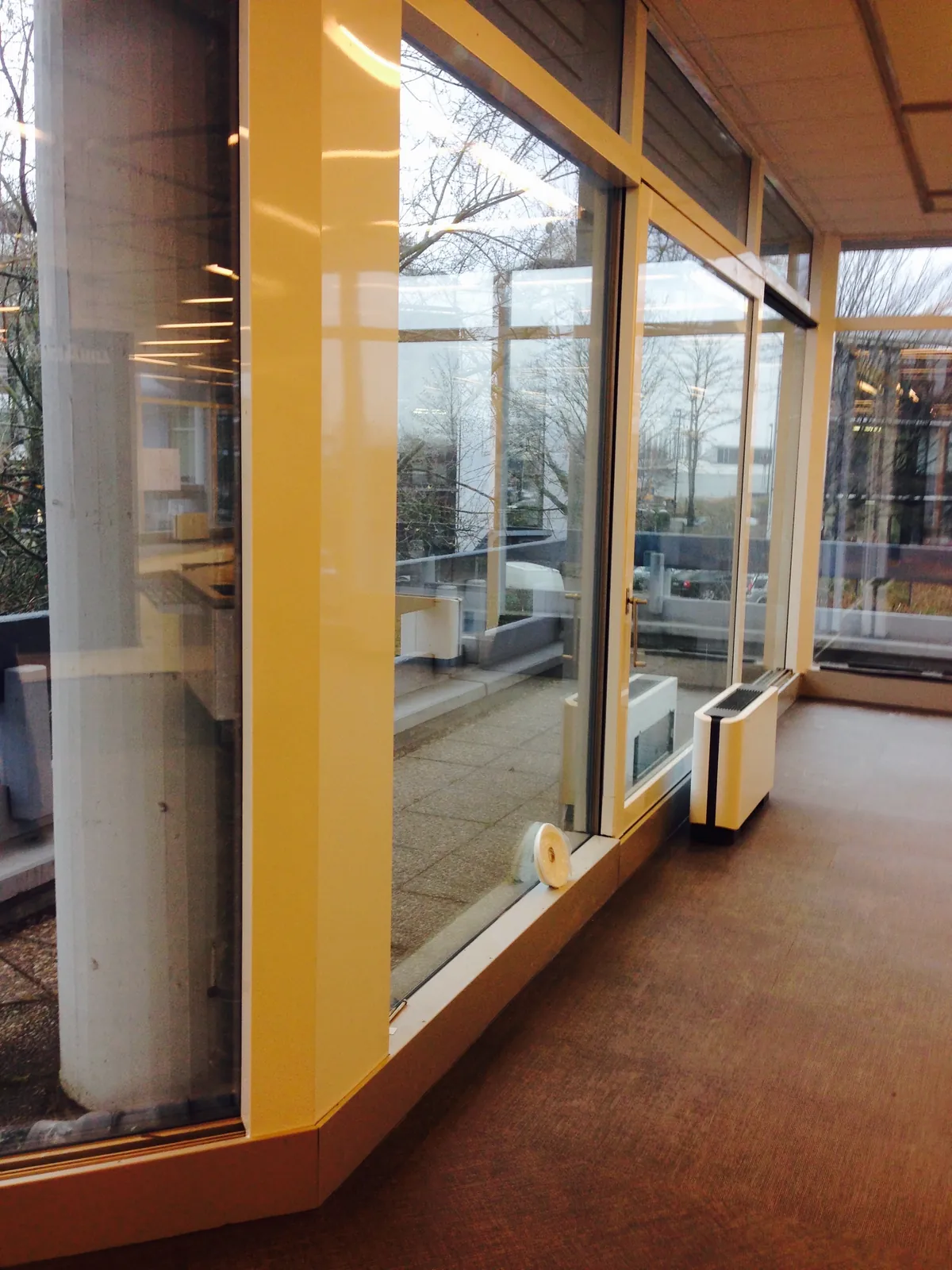
Before & After
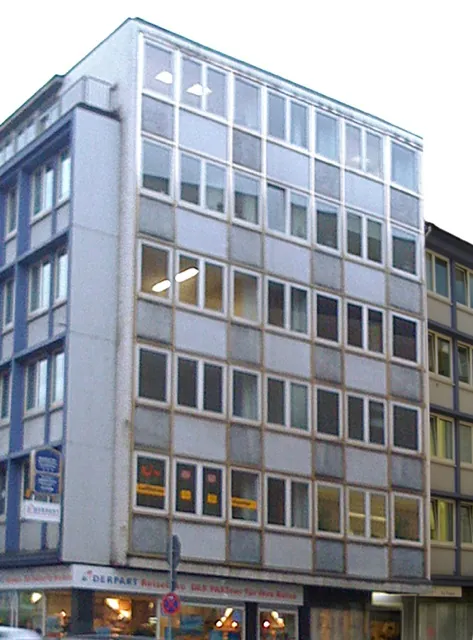
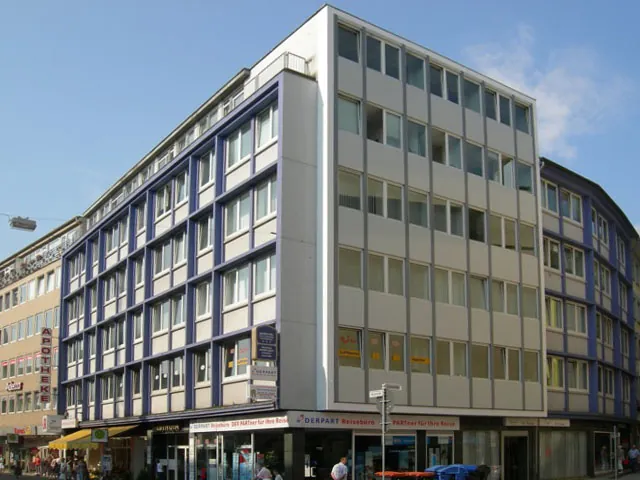
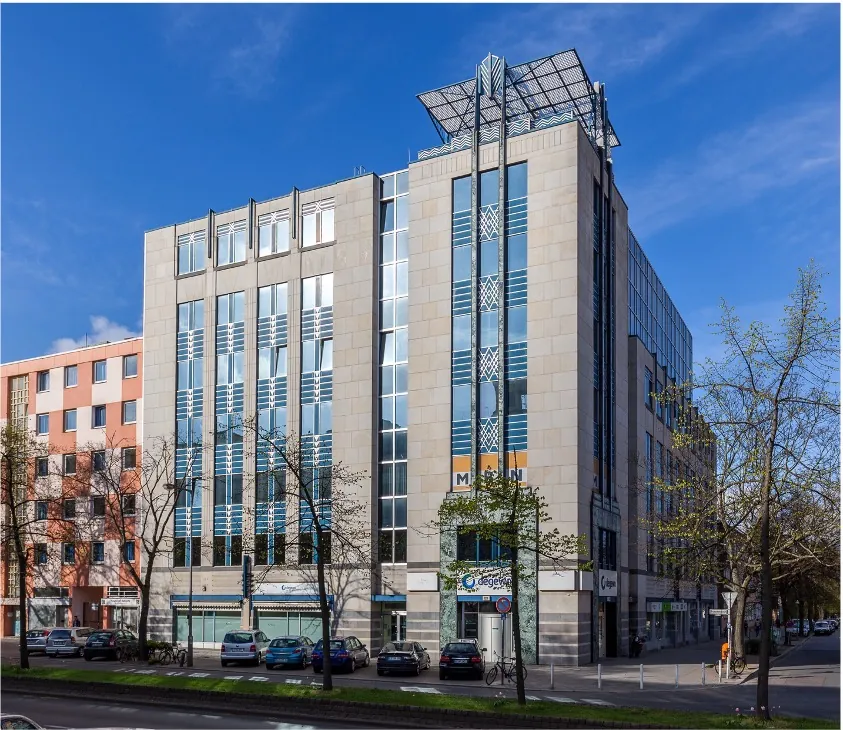
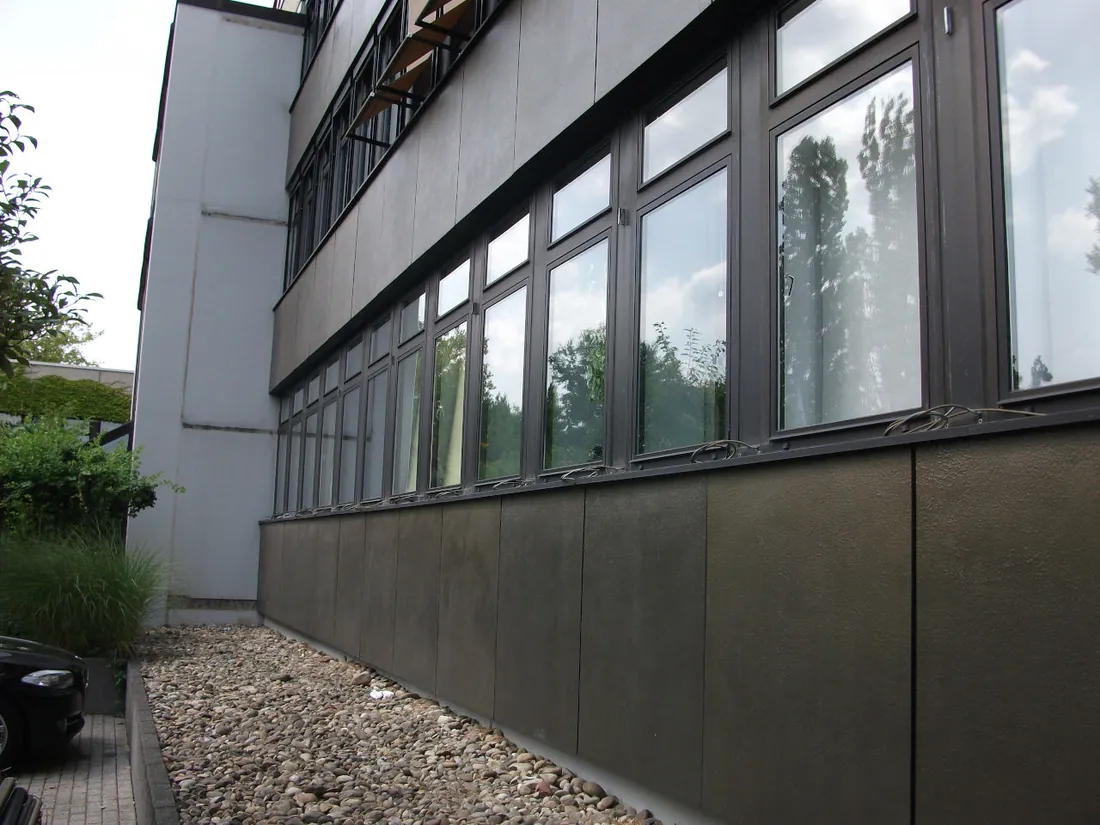
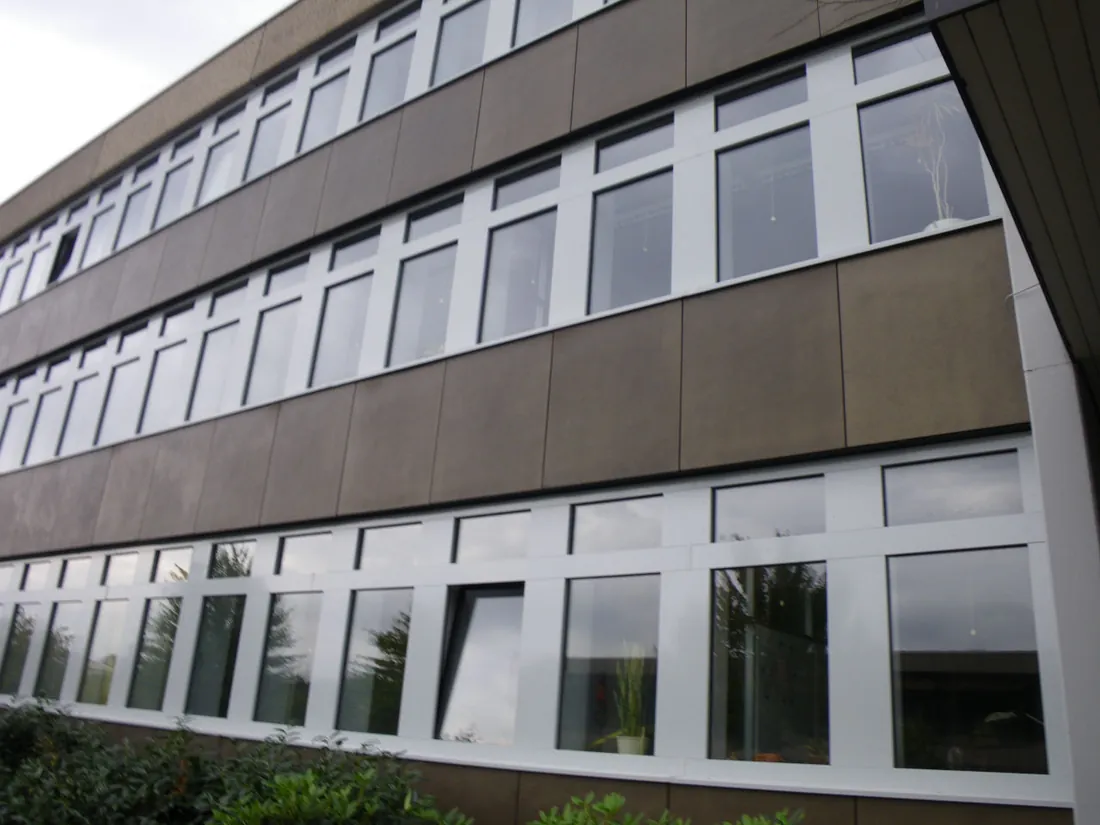
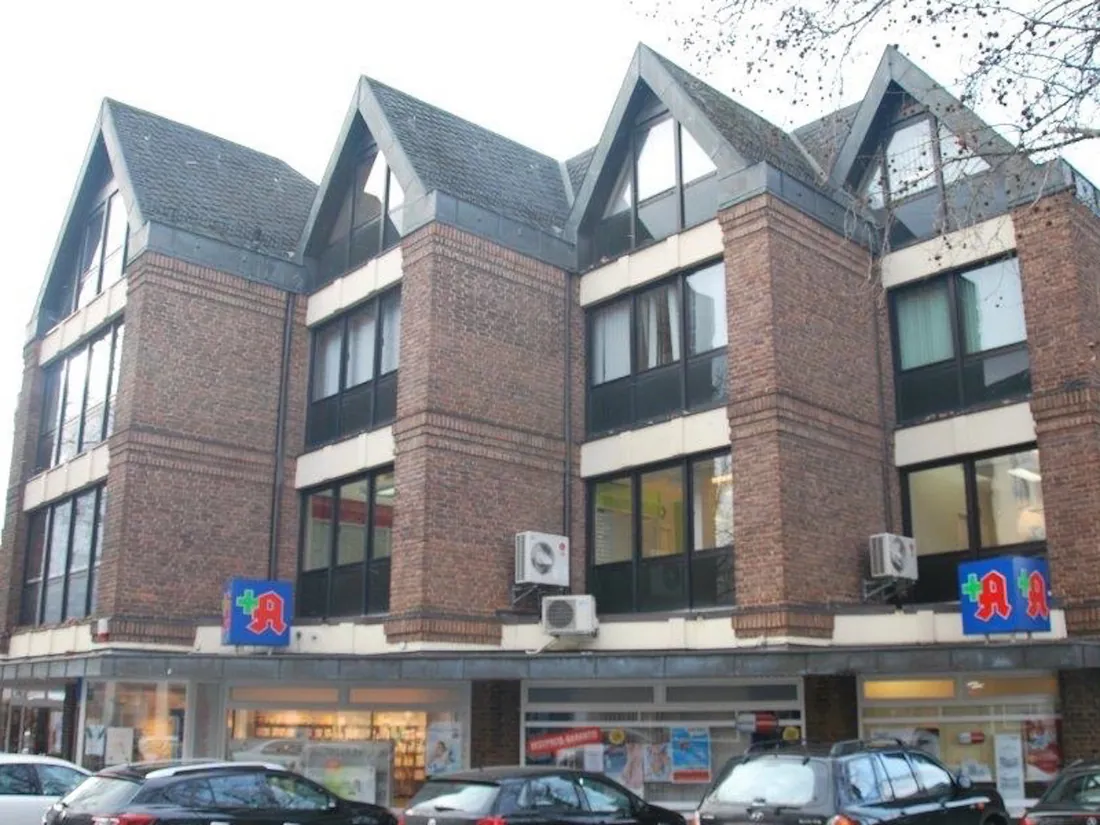
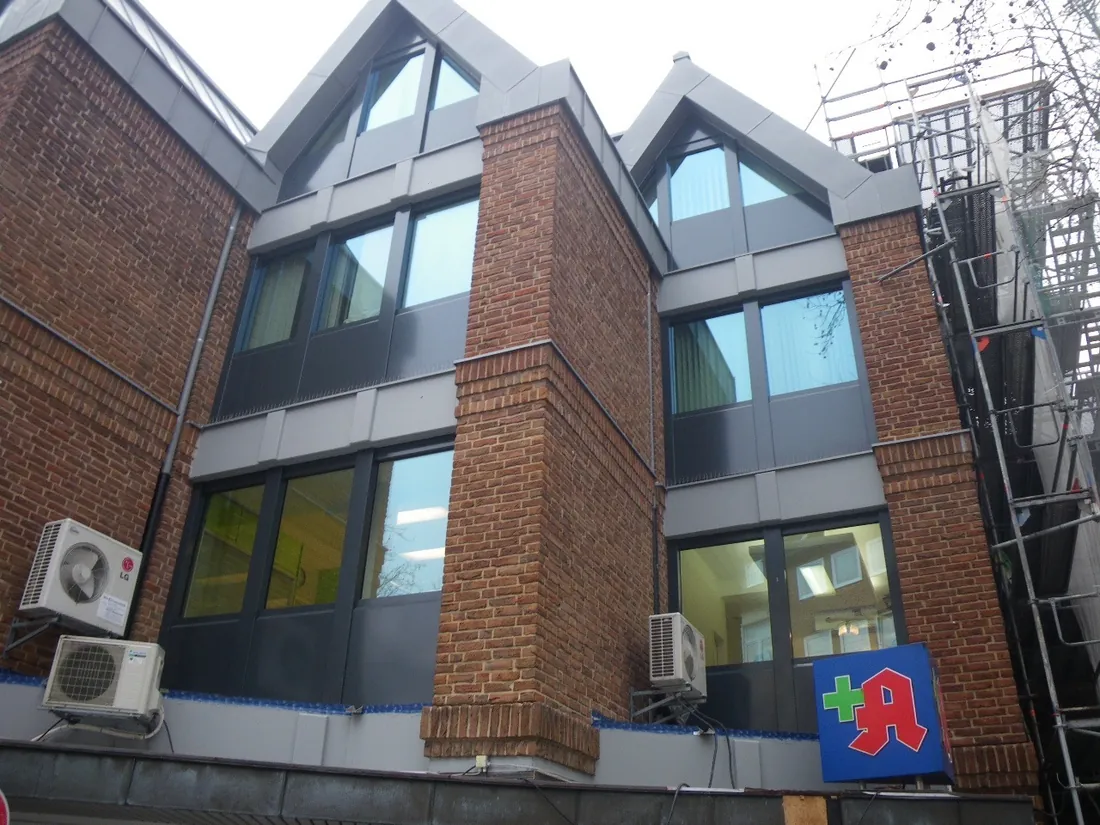
See for yourself how our reference projects look.
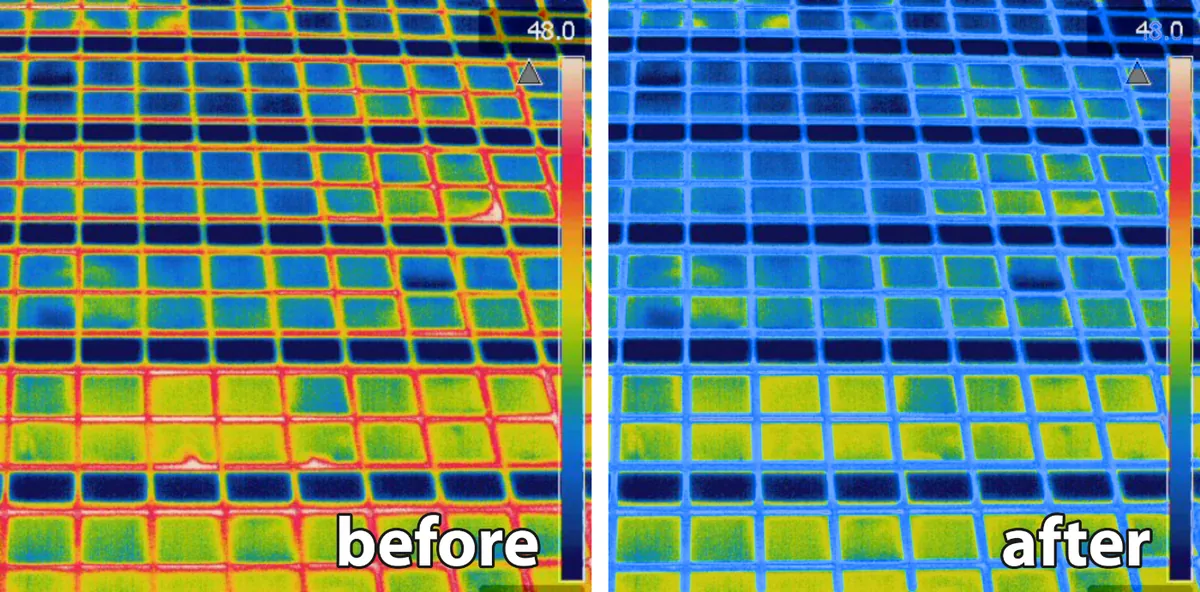
Thermal Proof: Before & After
Infrared images don't lie. Red and orange areas show massive heat loss through uninsulated aluminum profiles – wherever the profiles run.
After ALU-THERMIC insulation: profiles appear blue-cold. Heat transfer through the aluminum is significantly reduced.
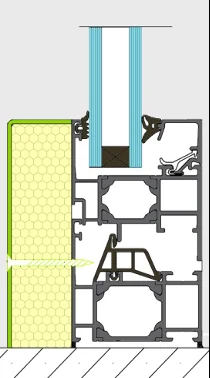
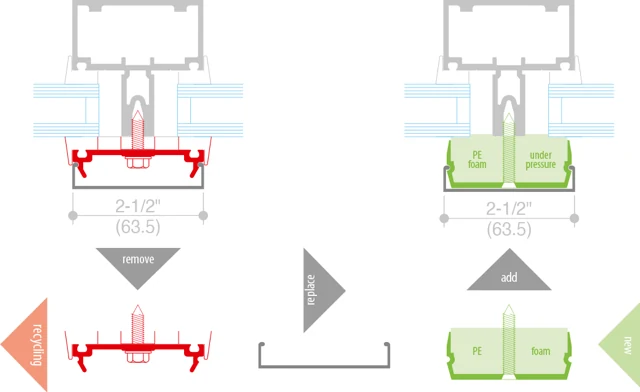
Insulated Pressure Plate 2.5"
Our pressure plate draws on around 20 years of experience in facade insulation. The insulating material in the U-profile fulfills three functions at once.
Our sealing principle follows the movements of the aluminum construction and keeps the corners permanently tight.
Fixation of the glass panes
Insulation of the space between the panes and the glass edge
Sealing the facade against water and wind
(same sealing principle, tested per ASTM E283 & E331, CAN-BEST 2016)
Reuse of the existing snap cap possible
Your Benefits at a Glance
At Least 50% Cost Savings
Renovation at a fraction of the cost of a new facade.
Zero Downtime
Installed almost entirely from the outside – your office operations continue normally.
Independently Tested
Airtight and watertight per ASTM E283/E331 (CAN-BEST), U-value -73% (Passivhaus Institut).
ROI in 8-15 Years
Your investment pays back through energy savings.
Free Color Choice
Powder coating in any RAL color – new look included.
Better Indoor Climate
No condensation, and therefore no mold.
GModG, EPBD, Minergie
Meets the requirements for refurbishing existing buildings under the GModG and the EPBD, as well as Minergie.
20+ Years Experience
Proven system, awarded in Canada 2015.
Reference Projects
Over 20 years of successfully completed projects – from office buildings to curtain wall facades.
“Replacing the windows outright was ruled out on cost grounds. The ALU-THERMIC system preserved the building's original appearance – with demonstrably improved insulation. Across two winter seasons, no further condensation was recorded.”
“ALU-THERMIC carried out the façade work in accordance with the contract and to our complete satisfaction – with great commitment, expertise and proactive cooperation. Their handling of tenants during the construction period was likewise marked by considerable professionalism and courtesy.”
Additional references available on request · All projects completed successfully.
Frequently Asked Questions
Start Your Renovation Project
Free initial consultation – we analyze your facade and provide a no-obligation quote.